
 EN
EN  DE
DE  FR
FR The Hidden Transition Gap
A validated prototype is not a manufacturable product. The transition from engineering validation to stable series production is where most programs lose time, budget, and quality control.
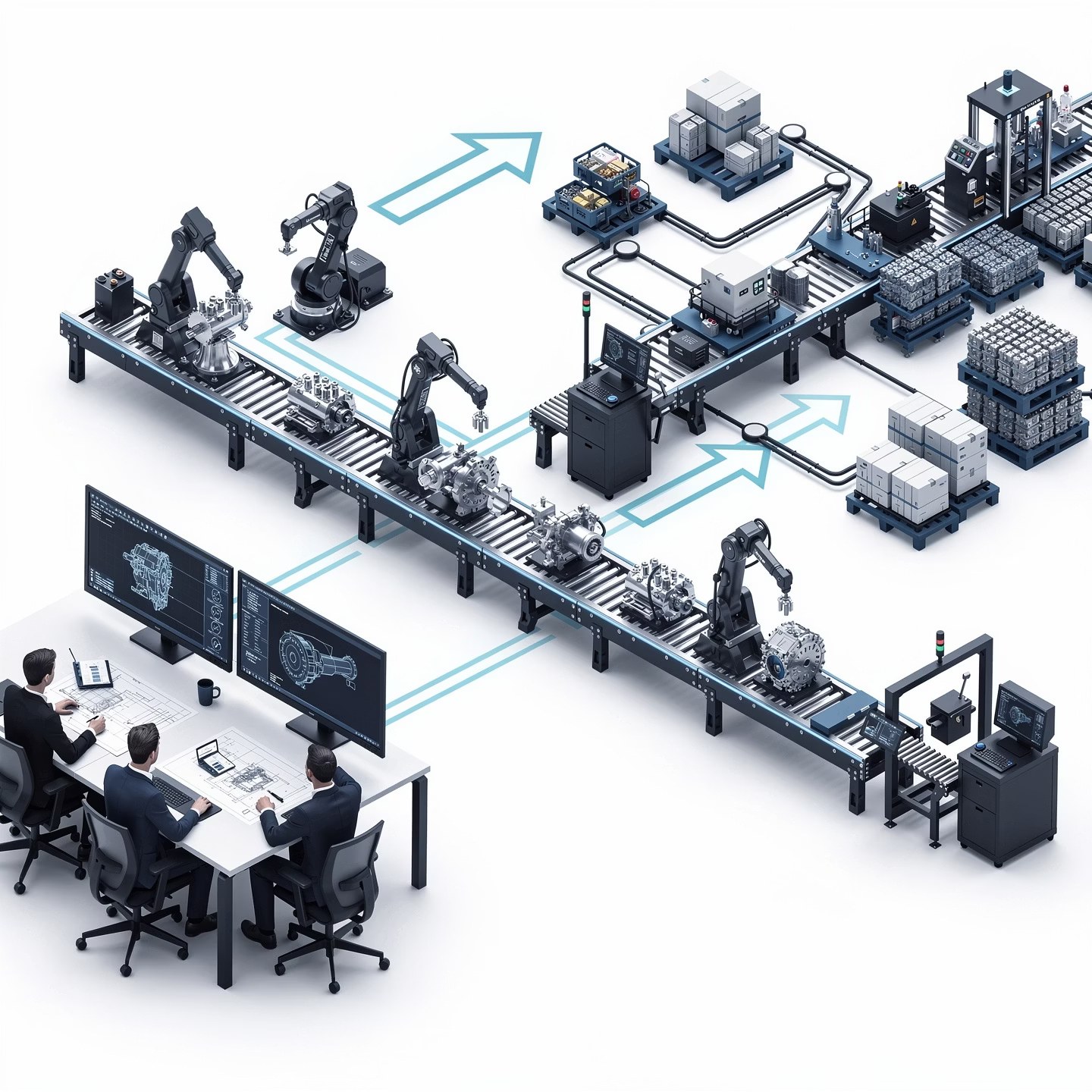
Common Failure Modes at the Transition
Engineering ownership becomes fragmented — no single technical authority owns the transition
Manufacturing readiness is insufficient — DFM and process validation are incomplete at handover
Supplier coordination breaks down — interfaces and specifications are not locked
Verification activities remain incomplete — open test items carry into production
Compliance documentation is delayed — regulatory submissions lag behind program milestones
Design changes become expensive — late ECOs drive cost and schedule overruns
ELISOF Engineering exists to close this gap — providing structured technical ownership from prototype through to stable series production.
The ELISOF Prototype-to-Series Method
A five-phase structured engineering process — designed to eliminate ambiguity at every transition point from concept to stable production.
Understand
Establish engineering baseline
- Requirements capture
- Stakeholder alignment
- Risk identification & interface mapping
→ Requirements baseline, risk register
Structure
Define system architecture
- Functional decomposition
- V-model planning
- Interface control & supplier identification
→ System architecture, interface definition document
Validate
Verify design against requirements
- Prototype testing
- Verification execution
- Design reviews & FMEA
→ Verification plan, test reports, design review records
Industrialize
Qualify manufacturing & supply chain
- PFMEA & control plans
- Tooling qualification
- Supplier readiness review & MRA
→ Manufacturing readiness assessment, supplier readiness review
Stabilize
Achieve repeatable series production
- SOP validation
- Production monitoring
- Compliance closure & ECO management
→ Compliance documentation, engineering change management records
Typical Deliverables
ELISOF Engineering engagements produce structured, traceable engineering outputs — not reports. Every deliverable is tied to a requirement, a phase gate, and a responsible owner.
Requirements Baseline — Structured, traceable specification document aligned to stakeholder needs
System Architecture — Functional and physical decomposition with interface definitions
Interface Definition Document — Locked interface specifications across all system boundaries
Verification Plan — Test strategy, methods, and acceptance criteria per requirement
Manufacturing Readiness Assessment — Formal evaluation of production process maturity
Supplier Readiness Review — Qualification status and readiness of key supply chain partners
Compliance Documentation — Regulatory and normative evidence package for submission
Engineering Change Management — Controlled ECO process with impact assessment and traceability
Risk Register — Living risk log with mitigation actions, owners, and status tracking
Engineering Capabilities Applied Across the P2S Method
Systems Engineering
- Requirements decomposition & V-model execution
- Full lifecycle traceability across all deliverables
Industrialization
- PFMEA, control plans & process validation
- Design-for-manufacturing from concept phase
Compliance-Driven Engineering
- ISO, IEC & sector-specific standards from day one
- Integrated into design, documentation & validation
Sectors We Operate In
Automotive & Mobility
Electromechanical systems, actuators and industrialization for automotive and mobility applications.
Industrial Automation
Complex electromechanical equipment and production systems
Medical Devices
Regulated medical technologies from prototype to manufacturing
Defence & Critical Systems
Mission-critical systems requiring structured engineering and compliance
Ready to Move Beyond the Prototype?
Structured engineering enables predictable industrialization, reduced program risk, and stable series production. ELISOF Engineering provides the technical ownership to make that transition happen.
